
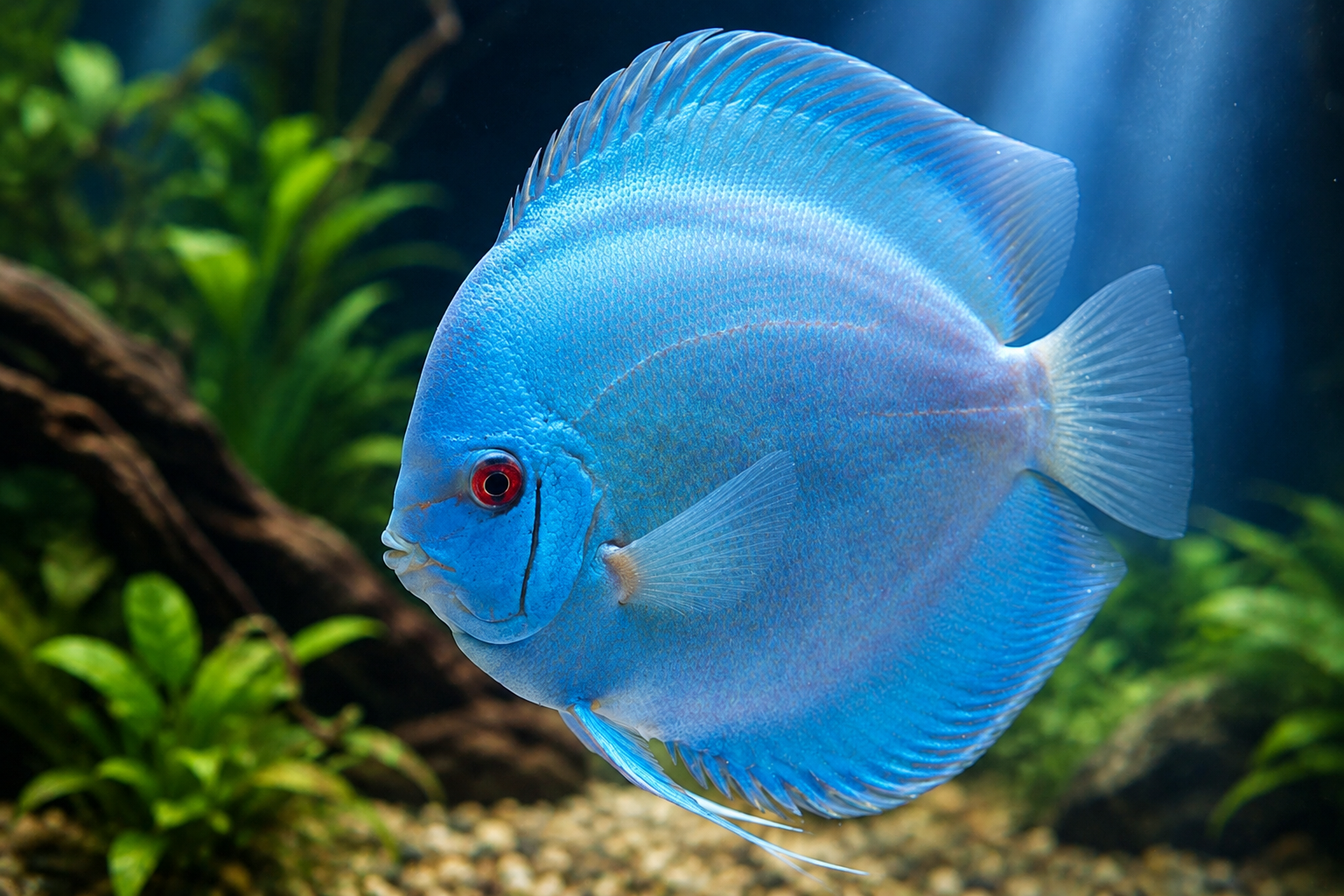
Leopard is a spotted / leopard discus variety typically associated with variable, often blue/tan/yellow coloration and spotted / broken pattern.
Leopard Discus
Leopard Discus belongs to the spotted / leopard group within the discus hobby. Leopard is a spotted / leopard discus variety typically associated with variable, often blue/tan/yellow coloration and spotted / broken pattern.
This is a selectively bred aquarium strain rather than a separate species. Its name describes a recognizable combination of color, pattern and breeding selection, while individual fish can still vary.
There is no single international registry controlling discus strain names, so this name may be used somewhat differently among breeders, exporters and retailers.
Color and pattern expression can change with genetics, maturity, nutrition, lighting, aquarium background, water quality and stress. Body shape, clear eyes, intact fins, alert behavior and overall condition are as important as color.
Leopard Discus Appearance & Identification
The defining visual cues for Leopard Discus are its variable, often blue/tan/yellow color family and spotted / broken pattern pattern. Leopard is a spotted / leopard discus variety typically associated with variable, often blue/tan/yellow coloration and spotted / broken pattern.
Spotted and leopard strains are evaluated heavily on spot definition, distribution and contrast. Pattern density can continue developing as juveniles mature.
Juveniles may look noticeably different from mature adults. Pattern coverage, saturation and contrast can strengthen with growth, so identification should consider age as well as current appearance.
What Makes Leopard Discus Unique?
Color & Pattern
Leopard is associated with variable, often blue/tan/yellow coloration and spotted / broken pattern patterning. The balance of these traits gives the strain its recognizable appearance.
Strain Classification
Leopard is treated here as a domestic aquarium strain: a selective-breeding classification for recognizable visual traits rather than a separate biological species.
Leopard Color Development & Maturity
Juvenile Leopard discus do not always display finished adult coloration. Saturation and pattern definition can strengthen with maturity. Genetics establishes the potential, while consistent nutrition, low stress and excellent water quality help the fish express it.
Lighting and aquarium background can also change how the same fish appears. Color should therefore be considered alongside body shape, fin condition, eyes, respiration and behavior.
Leopard Discus Care & Aquarium Requirements
Leopard Discus needs the same core husbandry as other discus: warm stable water, excellent water quality, appropriate social grouping, nutritious food and peaceful tankmates. Stability is generally more valuable than repeatedly changing chemistry to chase an exact number.
Tank Environment
Provide adequate swimming room, strong biological filtration and a maintenance schedule that keeps dissolved waste low. Avoid aggressive or hyperactive tankmates that prevent discus from feeding comfortably.
Feeding Leopard Discus
Offer a varied, nutritionally complete diet in portions the fish can consume cleanly. Quality prepared discus foods provide a dependable foundation and can be supplemented with other suitable foods. Consistent nutrition supports growth, condition and normal color development.
Avoid allowing heavy feeding to undermine water quality; uneaten food and excessive waste work against the clean, stable environment discus require.
Breeding Leopard Discus
Discus form pairs, deposit eggs on suitable surfaces and provide parental care. Newly free-swimming fry are notable for feeding from nutrient-rich skin secretions produced by their parents. Offspring appearance depends on genetics carried by both parents, not simply the commercial name attached to either fish.
Producing young that consistently resemble a domestic strain requires selection over generations. Crosses can produce variable offspring and reveal recessive traits not obvious in the parents.
Leopard History & Origin
There is no single international registry controlling discus strain names, so this name may be used somewhat differently among breeders, exporters and retailers.
Domestic discus strains are products of selective aquarium breeding. Because no single international registry controls color-strain names, terminology can overlap among regions. Discus Direct™ treats these names as hobby classifications and focuses on their associated visible traits rather than presenting every trade label as a separate biological taxon.
How to Choose a Healthy Leopard Discus
Look beyond color intensity. A promising fish should have a balanced rounded profile, open fins, clear eyes, normal respiration and alert behavior. Avoid specimens that remain unusually dark, clamp their fins, breathe heavily or show obvious damage. In juveniles, health and structure matter more than finished adult coloration.
Leopard Discus FAQ
What does a Leopard discus look like?
Leopard is associated with variable, often blue/tan/yellow coloration and spotted / broken pattern patterning. Individual expression varies with genetics and maturity.
Is Leopard a separate species of discus?
No. Leopard is a domestic aquarium strain name describing selectively bred visual traits, not a separate discus species.
Does Leopard change color as it grows?
Yes. Juveniles can develop stronger saturation, contrast and pattern definition with maturity. Genetics, nutrition, environment and stress all influence visible expression.
Does Leopard need different care from other discus?
Usually not fundamentally. Warm stable water, excellent water quality, quality nutrition, suitable social conditions and peaceful tankmates remain the core requirements.
How large can Leopard discus become?
Well-grown aquarium discus commonly reach roughly 6–8 inches in overall length, although final size varies with genetics, age and husbandry.
Available Leopard Discus
See current availability from Discus Direct™.